
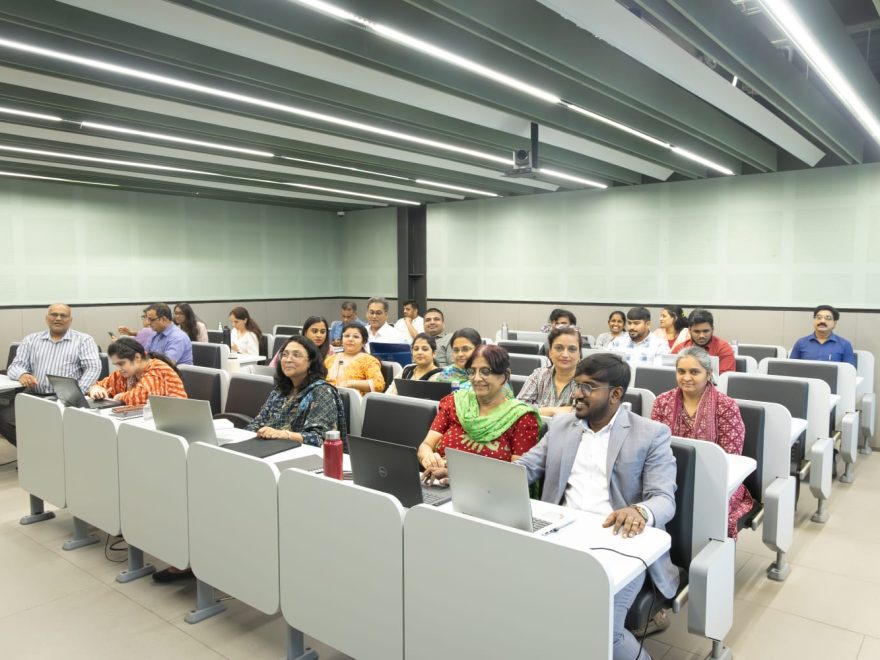
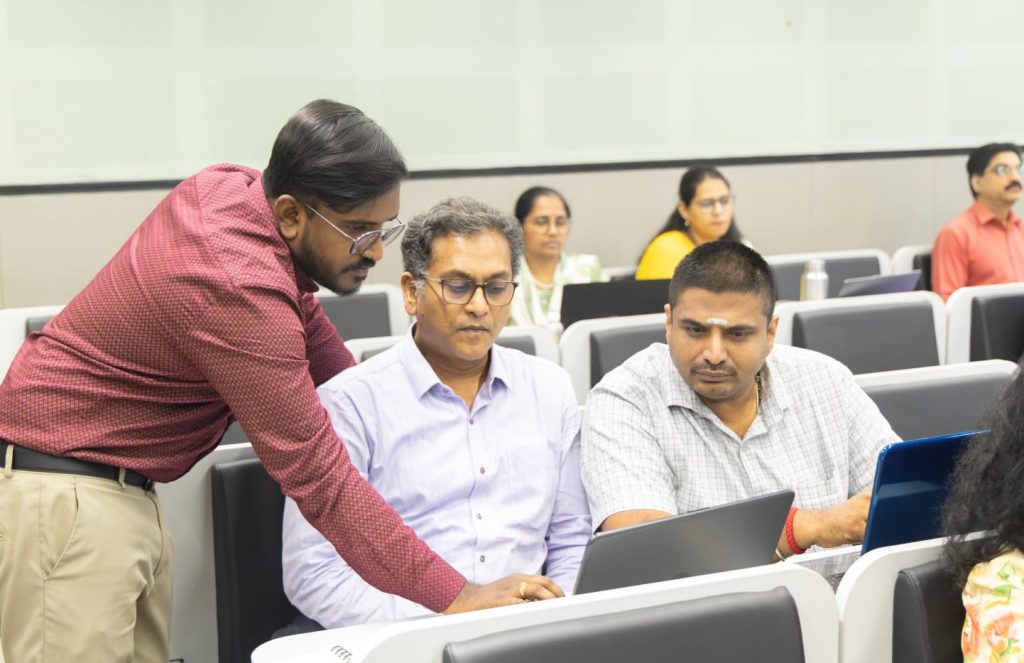
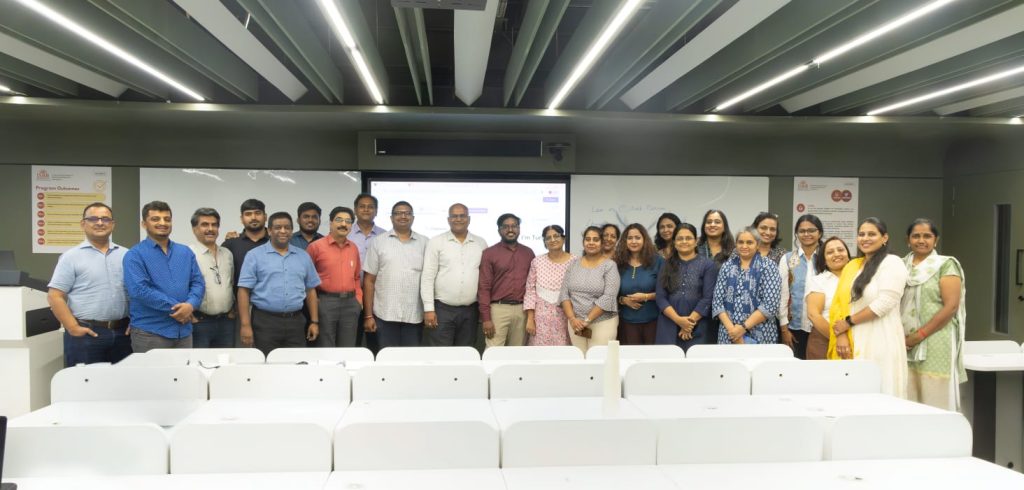
Artificial Intelligence is reshaping higher education across the world. From research support to classroom engagement, AI tools are helping educators improve productivity, creativity, and student learning outcomes. Recognizing this shift, ISBR Business School organized a two-day Faculty Development Programme (FDP) on AI for Management Educators on 14 and 15 May 2026.
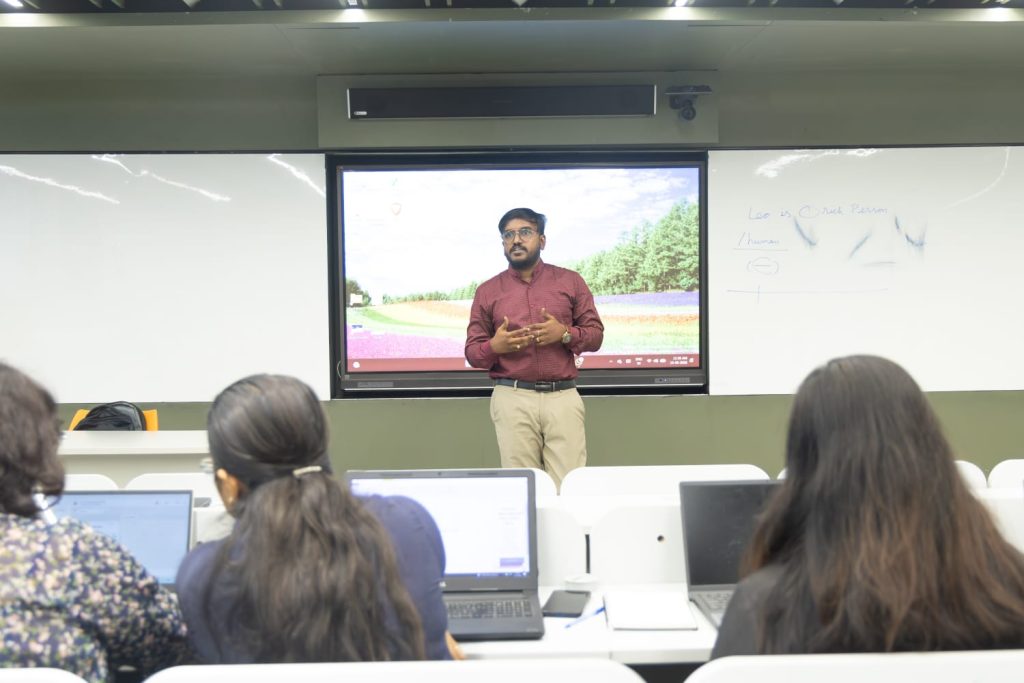
The programme focused on practical applications of Artificial Intelligence in teaching, assessment, research, automation, and academic administration. Faculty members explored modern AI tools, learned prompt engineering techniques, and gained hands-on exposure to emerging technologies shaping the future of management education.
Why AI for Management Educators Matters
The growing adoption of AI in higher education has created new opportunities for management educators. AI-powered platforms can simplify lesson planning, improve research efficiency, automate repetitive tasks, and enhance classroom engagement.
The FDP at ISBR Business School aimed to help faculty members:
- Understand the evolution of Artificial Intelligence
- Explore Large Language Models (LLMs) such as ChatGPT and Claude
- Learn prompt engineering for academic tasks
- Use AI responsibly in teaching and research
- Improve productivity using AI-powered automation tools
The programme combined conceptual learning with practical implementation, making it highly relevant for modern business school educators.
Day 1: Foundations of AI in Higher Education
Introduction to Artificial Intelligence and Large Language Models
The first session introduced participants to the fundamentals of Artificial Intelligence and its evolution from rule-based systems to generative AI technologies. Faculty members gained insights into how Large Language Models (LLMs) such as ChatGPT and Claude can support:
- Content generation
- Academic summarisation
- Research writing
- Student engagement
- Institutional documentation
The discussion emphasized that AI should function as an academic support tool rather than a replacement for faculty expertise.
ChatGPT for Teaching and Academic Productivity
One of the most engaging sessions focused on the effective use of ChatGPT in higher education.
Participants learned how to:
- Create structured prompts
- Generate lesson plans
- Draft professional emails
- Prepare quizzes and case discussions
- Improve academic writing
- Summarise research content
The session highlighted the importance of verifying and refining AI-generated content before classroom or research use.
Prompt Engineering for Educators
Prompt engineering emerged as a key skill for educators using AI tools.
Faculty members explored how prompt quality directly affects AI-generated output. The training covered:
- Role-based prompting
- Context-driven instructions
- Output formatting
- Tone and structure refinement
- Word-limit management
Examples included prompts for:
- Teaching notes
- Classroom activities
- Assessment rubrics
- Student feedback
- Academic summaries
This session demonstrated how carefully crafted prompts can significantly improve educational outcomes.
Interactive AI Quiz and Classroom Engagement
The FDP included an interactive AI-based quiz session that encouraged participation and active learning.
The quiz demonstrated how gamified learning tools can improve:
- Concept retention
- Classroom interaction
- Student participation
- Quick revision exercises
Faculty members also explored how digital quizzes can support formative assessment in management education.
Gemini and Microsoft Co-Pilot in Education
Participants were introduced to advanced AI platforms such as Gemini and Microsoft Co-Pilot.
The session explained how these tools can help educators with:
- Presentation preparation
- Writing support
- Data analysis
- Workflow optimization
- Content generation
Faculty members understood that selecting the right AI platform depends on specific academic and administrative needs.
AI Integration with Microsoft Office Tools
A practical hands-on session demonstrated how AI can be integrated with Microsoft Word, Excel, and PowerPoint.
AI in Microsoft Word
Faculty members explored AI-assisted academic drafting, editing, formatting, and report preparation.
AI in PowerPoint
The session focused on creating structured presentations and improving slide design using AI support.
AI in Excel
Participants learned how AI tools can simplify formulas, automate spreadsheet tasks, clean datasets, and support data analysis.
This session was particularly valuable because these applications are widely used in teaching, assessment, and research documentation.
AI-Powered Spreadsheet Productivity
Another session focused specifically on AI-supported Excel productivity.
Faculty members learned how ChatGPT can assist with:
- Formula generation
- Spreadsheet troubleshooting
- Data cleaning
- Table creation
- Data interpretation
The training showed how AI can reduce time spent on repetitive spreadsheet tasks while improving efficiency.
Image Creation and Extraction Using Gemini
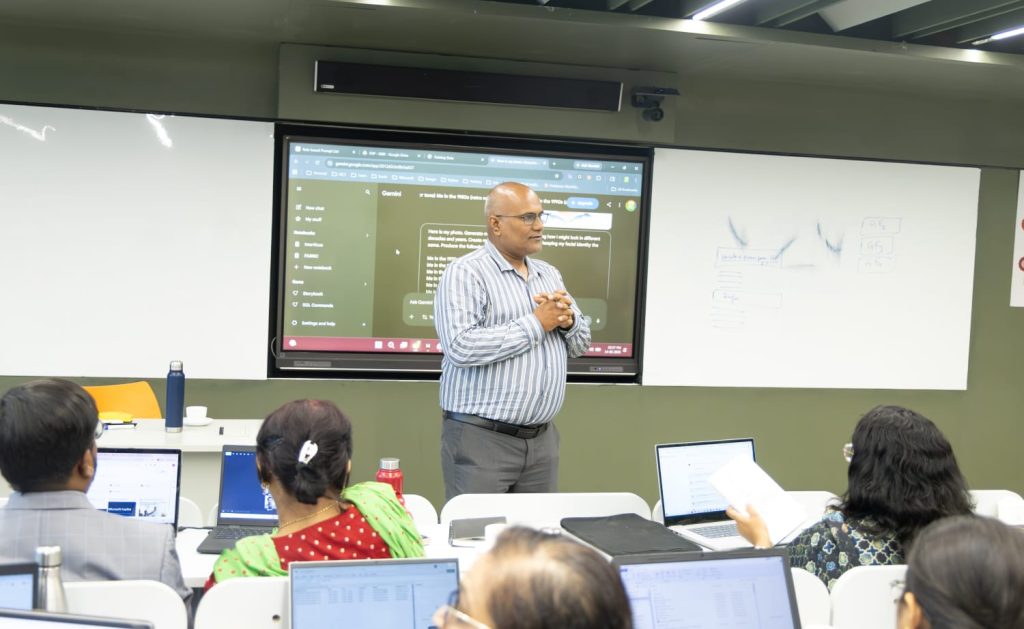
Towards the end of Day One, participants explored visual AI applications using Gemini.
The session covered:
- Extracting information from images
- Creating AI-generated visuals through prompts
- Designing classroom materials
- Enhancing presentations
This demonstrated the growing role of AI in visual communication and digital learning experiences.
Day 2 : AI for Research, Automation, and Assessment
Mentimeter for Interactive Learning
Participants received hands-on training in Mentimeter, a popular classroom engagement platform.
The session showed how educators can create:
- Live quizzes
- Polls
- Interactive feedback sessions
- Classroom discussions
For management educators, this tool can significantly improve participation during case studies and concept reviews.
Excel Add-ins and Advanced Productivity Tools
Faculty members were introduced to Excel add-ins, including PK’s Utility Tool.
The session focused on improving:
- Data formatting
- Attendance tracking
- Marks management
- Feedback analysis
- Research data handling
The training demonstrated how advanced spreadsheet tools can streamline academic administration.
Excel Developer Options and Automation
The FDP also explored the Developer option in Excel.
Participants learned about:
- Macros
- Form controls
- Workflow automation
- Advanced spreadsheet functionality
This exposure highlighted how automation can increase productivity in higher education institutions.
Suno AI and Creative Learning Applications
A dedicated session introduced Suno AI for text-to-audio and music-based outputs.
Participants explored creative applications such as:
- Classroom introductions
- Branding exercises
- Campaign simulations
- Student engagement activities
The session expanded faculty understanding of AI-driven creativity in management education.
AI for Research and Academic Writing
One of the most impactful sessions focused on AI tools for research support.
Participants explored platforms such as:
- SciSpace
- Consensus
- Google Scholar
These tools help researchers with:
- Literature reviews
- Research summarisation
- Article discovery
- Paper interpretation
The session also emphasized:
- Academic integrity
- Proper citation practices
- Plagiarism reduction
- Responsible AI-assisted writing
Faculty members were reminded that AI can support research, but originality and scholarly judgment remain essential.
Zapier, AI Agents, and Workflow Automation
The FDP included practical exposure to Zapier and AI agents.
Participants learned how automation can connect multiple applications using triggers and actions.
Use cases included:
- Academic communication
- Content organization
- Repetitive task management
- Workflow optimization
The session highlighted the increasing role of AI automation in higher education management.
Dataset-Based Teaching in Management Education
Faculty members were introduced to dataset-based teaching methods for business education.
The session encouraged educators to use real-world datasets for:
- Business analytics exercises
- Decision-making simulations
- Applied learning activities
- Student projects
This approach helps students connect theoretical concepts with practical business challenges.
AI in Assessment and Evaluation
The FDP also focused on AI-powered assessment design.
Participants learned how AI can assist in creating:
- Question papers
- Rubrics
- Assignments
- Case-based evaluations
- Student feedback formats
The discussion emphasized the importance of moving beyond memory-based assessment toward analytical and application-oriented learning.
Responsible and Ethical Use of AI in Higher Education
The programme concluded with an important discussion on ethical AI usage.
Faculty members were encouraged to maintain:
- Academic integrity
- Transparency
- Fairness
- Privacy awareness
- Originality in research and teaching
The session reinforced that AI should enhance educational quality while preserving human judgment and responsibility.
Conclusion
The AI for Management Educators Faculty Development Programme at ISBR Business School successfully equipped educators with practical AI knowledge for teaching, research, assessment, and academic administration.
By combining hands-on learning with ethical awareness, the programme demonstrated how Artificial Intelligence can strengthen higher education when used responsibly. Faculty members gained valuable exposure to AI tools, automation platforms, research technologies, and interactive teaching methods that can improve productivity and learning effectiveness.
As AI continues to transform management education, initiatives like this FDP play a critical role in preparing educators for the future of digitally enabled learning.
About ISBR Business School: ISBR Business School, located in Bangalore, India, is a premier institution dedicated to providing world-class education in business and management. Accredited by the NBA and recognized by the Association of Indian Universities and the Ministry of HRD, Government of India, ISBR has consistently been ranked as a platinum institute by AICTE-CII. With a diverse student body, a strong emphasis on industry collaboration, and a curriculum designed to foster innovation and leadership, ISBR Business School is committed to shaping the business leaders of tomorrow. The school’s robust placement record and partnerships with top global companies underscore its commitment to excellence and career readiness for its students