

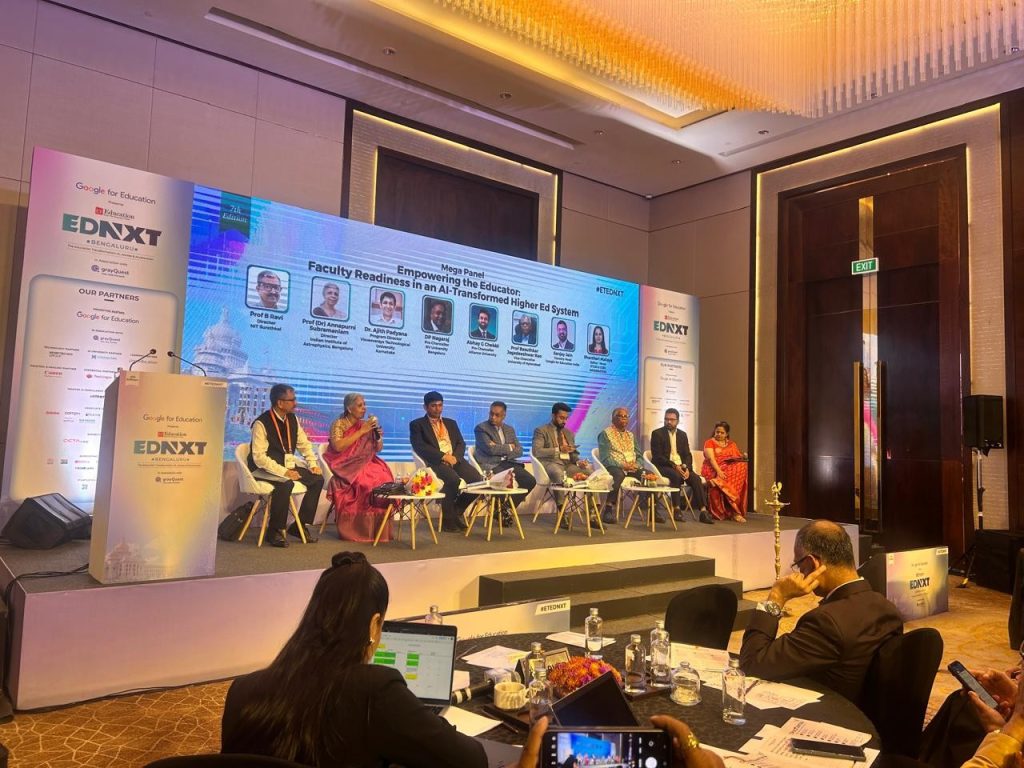
The rapid integration of AI in higher education is redefining how universities teach, conduct research, and prepare students for the global workforce. At the EDNXT Bengaluru Summit 2026, organized by The Economic Times Education, policymakers, academic leaders, and industry innovators gathered to discuss the theme “The Education Transformation: AI, Access & Acceleration.”
The summit explored how AI-driven education transformation, digital ecosystems, and global academic collaboration are reshaping universities worldwide. For institutions focused on research excellence and doctoral education, such discussions provide valuable insights into strengthening AI-powered learning and research frameworks while preparing students for the future of higher education with AI.
Representatives from the ISBR Research Centre—including Dr. Anandaram K S, Dr. M. R. Jhansi Rani, Mrs. Deepa Joseph, and Mr. Badhri Narayanaa P—participated in the summit to gain strategic insights into emerging trends in AI-enabled research, interdisciplinary learning, and doctoral program development.
AI in Higher Education: A Catalyst for Academic Innovation
Artificial Intelligence is rapidly transforming university ecosystems. Institutions are adopting AI-powered platforms to improve learning experiences, streamline administrative processes, and enhance research productivity.
Key applications of AI-driven education transformation include:
- Personalized learning pathways for students
- Automated grading and assessment systems
- AI-assisted research data analysis
- Intelligent academic advising tools
By integrating these technologies, universities are building future-ready digital campuses capable of supporting advanced research and student-centered learning.
Faculty Readiness for AI-Enabled Education
A major theme at the summit focused on preparing educators for AI-powered learning environments. Faculty readiness is essential for successful digital transformation in universities.
Experts emphasized:
- Continuous faculty training in AI tools and digital pedagogy
- Enhancing digital literacy among educators
- Encouraging experimentation with AI-based teaching methods
- Investing in professional development programs
When faculty members are empowered with AI-driven teaching tools, they can deliver more engaging and effective learning experiences.
AI-Powered Research and Interdisciplinary Innovation
Interdisciplinary Research in the Age of AI
AI technologies enable:
- Advanced data analytics and predictive modeling
- Cross-disciplinary research between fields such as business, engineering, and social sciences
- Faster knowledge discovery through intelligent research platforms
This shift toward AI-powered interdisciplinary research is expanding the boundaries of innovation and encouraging universities to adopt collaborative research ecosystems.
Global Collaboration and International Academic Partnerships
As higher education becomes increasingly globalized, institutions are forming international partnerships to expand research impact and academic mobility.
Key benefits of global collaboration include:
- Joint research initiatives across universities
- International doctoral exchange programs
- Cross-border knowledge sharing
- Global research funding opportunities
Future Skills for the AI Economy
Preparing Students for AI-Driven Careers
The evolving digital economy demands a new set of skills. Universities must redesign curricula to equip students with competencies that align with technological transformation.
Future-ready skills emphasized at the summit include:
- Data literacy and analytics
- Critical thinking and problem-solving
- Innovation and entrepreneurial mindset
- Adaptability in technology-driven environments
Developing these competencies ensures graduates remain competitive in an AI-driven global workforce.
Strengthening Doctoral Programs and Research Training
Participation in the summit offered valuable perspectives for strengthening the research ecosystem and doctoral programs.
Key Strategic Takeaways
- Leveraging AI-enabled research tools for improved research productivity
- Enhancing doctoral research quality through AI-assisted literature review and data analysis
- Encouraging interdisciplinary and collaborative research initiatives
- Adopting structured research training and mentorship frameworks
- Expanding international academic partnerships
These insights support the development of a robust and globally connected research ecosystem.
The Future of Higher Education in the AI Era
The EDNXT Bengaluru Summit 2026 reinforced an important message: AI will be a defining force in the future of higher education. Institutions that successfully integrate AI technologies, digital pedagogy, and global collaborations will lead the next era of academic innovation.
For research centers and universities, embracing AI-powered learning, interdisciplinary research, and global academic engagement is essential to creating a future-ready education ecosystem.

About ISBR Business School: ISBR Business School, located in Bangalore, India, is a premier institution dedicated to providing world-class education in business and management. Accredited by the NBA and recognized by the Association of Indian Universities and the Ministry of HRD, Government of India, ISBR has consistently been ranked as a platinum institute by AICTE-CII. With a diverse student body, a strong emphasis on industry collaboration, and a curriculum designed to foster innovation and leadership, ISBR Business School is committed to shaping the business leaders of tomorrow. The school’s robust placement record and partnerships with top global companies underscore its commitment to excellence and career readiness for its students