
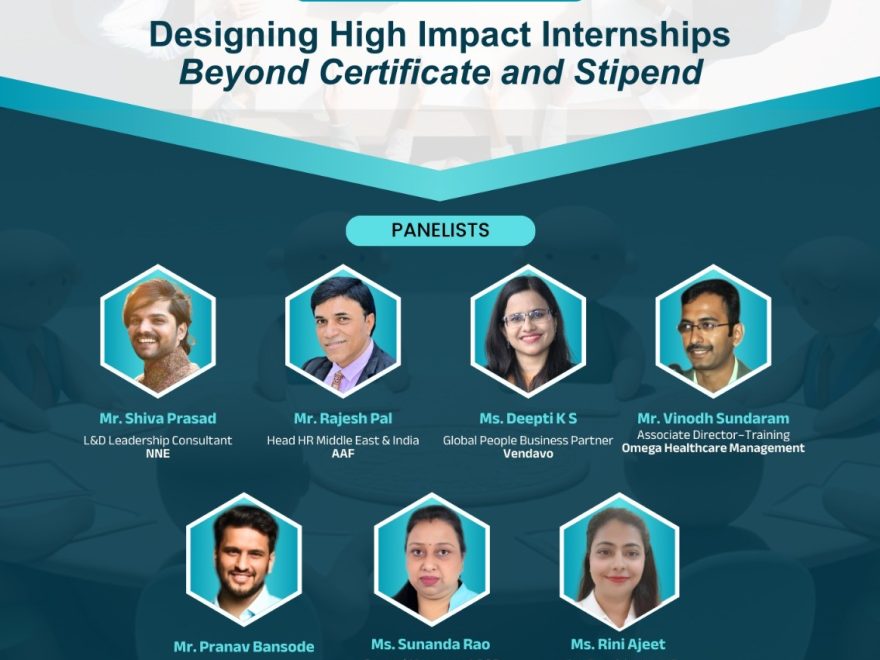
In an evolving global business environment, internship programs insights are shaping the future of management education. Institutions that embrace next-gen internships and strong industry-academia collaboration are better positioned to drive student career development through structured internships.
ISBR Business School’s Round Table Conference brought together industry leaders and academic experts to explore how internships can evolve into meaningful, high-impact learning experiences.
Next-Gen Internship Programs and Industry-Academia Collaboration
The conference served as a strategic platform for sharing internship programs insights across sectors such as manufacturing, healthcare, SaaS, startups, and human resources.
The discussion focused on:
- Aligning academic learning with real-world business needs
- Enhancing collaboration between institutions and organizations
- Designing next-gen internships that create measurable value
This exchange reinforced the importance of integrating industry expectations into academic frameworks.
Eminent speakers across industry has participated in the conference:
• Mr. Shiva Prasad – Industry Leader (Manufacturing Sector)
• Mr. Vinodh Sundaram – Healthcare Industry Expert
• Mr. Pranav Bansode – Startup and Recruitment-Tech Professional
• Ms. Sunanda Rao – Leadership and Professional Development Expert
• Ms. Deepti K S – Human Resource Leader
Designing Structured Internships for Real Impact
A major highlight was the emphasis on structured internships as a foundation for effective learning.
Core Elements of Next-Gen Internship Programs
- Clearly defined learning objectives
- Skill-based milestones and performance metrics (KPIs/KRIs)
- Dedicated mentorship and guidance
- Alignment with organizational goals
Real-World Exposure: The Backbone of Next-Gen Internships
Modern internship programs’ insights emphasize the importance of real-time industry exposure. Interns must go beyond observation and actively engage in:
- Live business projects
- Operational workflows
- Data-driven initiatives
Such immersive experiences help students build practical knowledge and prepare for complex professional environments.
Strategic Learning in Internship Programs
Industry leaders highlighted a critical shift—internships must foster strategic thinking. Students are now expected to actively participate in business decision-making, develop strong problem-solving abilities, and build negotiation and analytical skills. This evolution positions internships as powerful tools for shaping future leaders. Additionally, one of the most compelling internship programs insights was the importance of professional ownership. High-performing interns consistently demonstrate accountability, curiosity, initiative, discipline, and commitment. These qualities clearly differentiate impactful interns from passive participants and significantly enhance student career development.
Strengthening Internship Programs Through HR Perspectives
From an HR standpoint, several gaps were identified in traditional internship models:
- Lack of structured onboarding processes
- Undefined roles and expectations
- Absence of measurable performance outcomes
To overcome these challenges, deeper industry-academia collaboration is essential. Co-designed internship frameworks can ensure clarity, purpose, and long-term value.
What Defines Next-Gen Internship Programs
The round table emphasized that internships must evolve into value-driven, outcome-oriented experiences. High-impact internships are defined by clear and measurable learning outcomes, strong mentorship frameworks, exposure to real business challenges, continuous performance evaluation, and alignment with industry requirements. These elements ensure both learning value and organizational impact. The conference also delivered powerful internship programs insights for students, helping them understand evolving industry expectations, appreciate the importance of professionalism, connect internships with long-term career goals, and build meaningful, relevant industry experience that prepares them to become future-ready professionals.
Shaping the Future of Internship Programs
The Round Table Conference highlighted how next-gen internships can transform management education. Through strong industry-academia collaboration, institutions can design structured internships that go beyond academic requirements.
The future lies in creating internship programs that:
- Deliver experiential learning
- Build leadership capabilities
- Generate measurable impact
Ultimately, internships are no longer stepping stones—they are critical drivers of student career development and organizational success.
About ISBR Business School: ISBR Business School, located in Bangalore, India, is a premier institution dedicated to providing world-class education in business and management. Accredited by the NBA and recognized by the Association of Indian Universities and the Ministry of HRD, Government of India, ISBR has consistently been ranked as a platinum institute by AICTE-CII. With a diverse student body, a strong emphasis on industry collaboration, and a curriculum designed to foster innovation and leadership, ISBR Business School is committed to shaping the business leaders of tomorrow. The school’s robust placement record and partnerships with top global companies underscore its commitment to excellence and career readiness for its students