
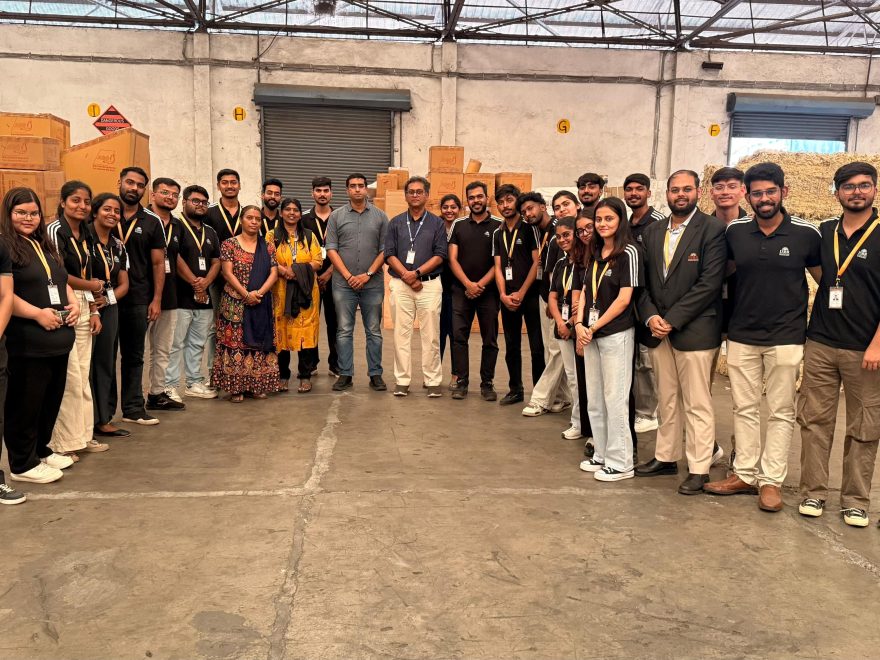
Logistics and ICD operations, CONCOR logistics, Inland Container Depot India, and rail logistics supply chain are central to understanding how modern trade functions. A field visit on 28th March 2026 to the Container Corporation of India (CONCOR) offered deep insights into India’s logistics ecosystem. The experience highlighted how Inland Container Depots (ICDs), also known as dry ports, and rail logistics are transforming the efficiency, scalability, and reliability of supply chains across the country.
ISBR’s visit to CONCOR: Understanding Logistics and ICD Operations in India
Logistics is the backbone of any economy. It ensures the seamless movement of goods across regions and borders. The four primary modes—sea, air, rail, and road—each play a unique role. While sea freight has traditionally dominated due to cost efficiency, rail logistics is emerging as a powerful alternative for inland cargo movement.
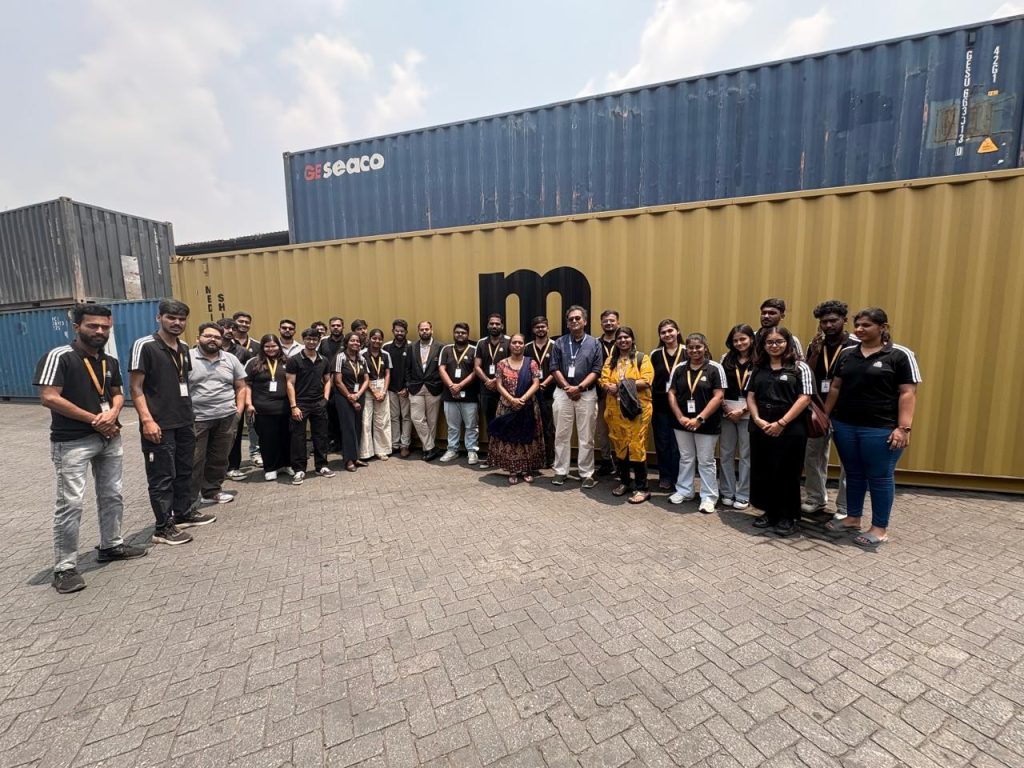
As part of their academic curriculum, ISBR PGDM Operations students had the privilege of visiting CONCOR, under the guidance of Dr. Karpagavalli G and Dr. Senthil Velan, gaining valuable industry exposure and practical insights into real-world logistics operations.
This shift reflects the growing importance of rail logistics supply chain optimization in India’s economic growth.
What is an Inland Container Depot (ICD)?
An Inland Container Depot (ICD), or dry port, is a facility located away from seaports. It acts as an extension of maritime ports and connects importers and exporters to global trade routes.
Key Stakeholders in ICD Operations
Understanding Inland Container Depot India requires examining its ecosystem:
- Indian Customs: Ensures compliance, prevents smuggling, and enables faceless assessment
- Custodian: Manages cargo safety and storage
- Indian Railways: Facilitates cargo transport
- Shipping Lines: Coordinate international container movement
- Labour Workforce: Handles physical cargo operations
- Custom House Agents (CHAs): Manage documentation and customs clearance
- Connectivity Systems: Rail and road links ensure seamless transport
These stakeholders collectively enable efficient CONCOR logistics operations.
CONCOR Logistics Infrastructure and Operations
Established in the 1980s, CONCOR has grown into a leading logistics provider with 61 terminals across India. These terminals are categorized as:
Types of CONCOR Terminals
- EXIM Terminals: Handle export-import cargo
- Domestic Terminals: Focus on internal cargo movement
- Combined Terminals: Serve both EXIM and domestic needs
A notable feature is the clear segregation between domestic and international cargo zones, ensuring operational efficiency and compliance. CONCOR handles nearly 100 train rakes per month, demonstrating the scale of rail-based logistics.
Containerization and Cargo Movement
The shift from traditional cargo handling to containerization has revolutionized logistics.
Modes of Cargo Transport
1. Bulk Cargo
- Minimal packaging required
- Suitable for raw materials and commodities
2. Containerized Cargo
- Requires standardized packaging
- Ensures safety, quality, and efficiency
Common Export Commodities
- Food products
- Automotive parts
- Machinery
- Pharmaceuticals
- UPS systems and accessories
Common Import Commodities
- Furniture
- Solar modules
- Fabrics
- Spare parts
Warehousing Solutions at CONCOR
CONCOR provides advanced warehousing facilities designed to meet diverse business needs.
Types of Warehousing
- Public Warehousing: Accessible to all users
- Bonded Warehousing: Enables deferred duty payments
- Private Warehousing: Dedicated to single clients
- Multi-Client Warehousing: Shared storage model
The visited facility features 13 warehouses spanning 5 lakh square feet, showcasing large-scale storage capacity. This multi-client model enhances logistics and ICD operations efficiency by maximizing infrastructure utilization.
India’s Logistics Infrastructure: Key Insights
India’s logistics ecosystem is vast and rapidly evolving:
- 300 ports across the country
- Major ports governed by the central government
- Minor ports managed by state governments
- Indian Railways ranks 4th globally by network size
- CONCOR operates 61 terminals nationwide
These statistics highlight the scale and importance of Inland Container Depot India systems.
The CONCOR field visit provided a comprehensive understanding of logistics and ICD operations in India. From rail-based cargo movement to advanced warehousing systems, the experience highlighted how integrated logistics networks drive economic growth.
As India continues to invest in infrastructure and digitalization, CONCOR logistics and Inland Container Depot India systems will play an even greater role in shaping the future of global trade.
About ISBR Business School: ISBR Business School, located in Bangalore, India, is a premier institution dedicated to providing world-class education in business and management. Accredited by the NBA and recognized by the Association of Indian Universities and the Ministry of HRD, Government of India, ISBR has consistently been ranked as a platinum institute by AICTE-CII. With a diverse student body, a strong emphasis on industry collaboration, and a curriculum designed to foster innovation and leadership, ISBR Business School is committed to shaping the business leaders of tomorrow. The school’s robust placement record and partnerships with top global companies underscore its commitment to excellence and career readiness for its students